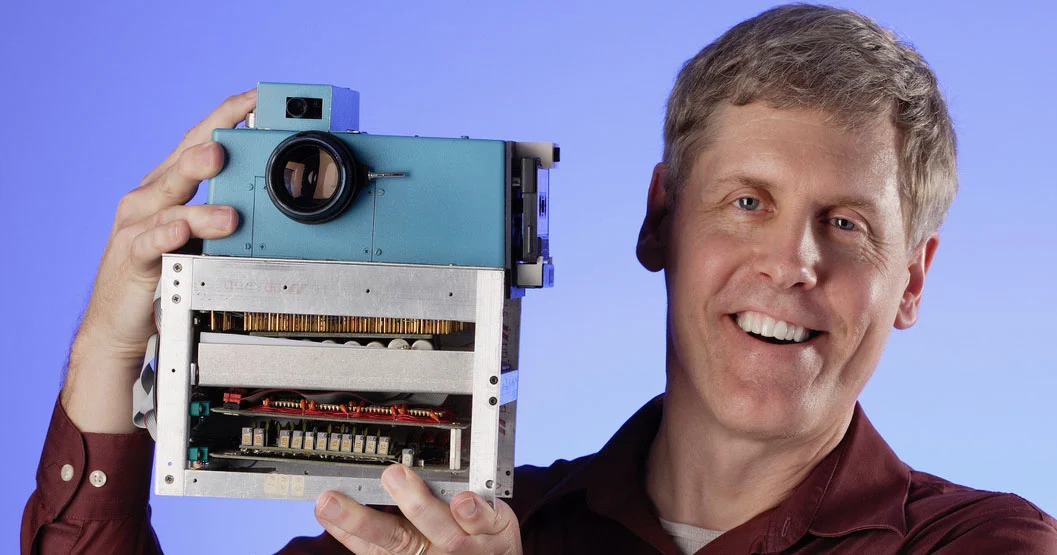
I wrote about this idea in my book, The Bravest You, but I wanted to revisit it from a different angle. Having the right idea means nothing if you’re too distracted by the present to commit to it. In 1975, a 24-year-old Kodak engineer named Steve Sasson built the world’s first digital camera. It was the size of a toaster, it shot in black and white, and it took 23 seconds to capture a single image. But, the first or one-hundredth post is never perfect.
The funny thing is that leadership at Kodak looked at it and said, “that’s interesting.” They then put it away only to keep working at their area of expertise: film photography. Maybe that seemed like the right thing to do at the time? But ultimately, they didn’t take the time to focus on evolving photography as a whole.
Their reasoning at the time was logical. Kodak controlled 90 percent of the film market in America. Film was profitable. Film was known. Digital was a distraction from the core business — or so they believed. So they kept their focus on what was already working, and slowly stopped paying attention to what the future of photography could be.
Kodak filed for bankruptcy in 2012. The digital camera they invented — and ignored — had become the world’s standard. The iPhone alone had made film obsolete. They found that the future of film and any area of business belongs to the innovators, the disruptors. And any time you think you have it figured out, you don’t.
Remember the fun part of business, probably the reason you started in the first place: the journey is never over, there is no finish line.
I think about Kodak often when I watch leaders manage their attention. Because the problem was never that they lacked vision. Steve Sasson gave them the vision in 1975. The problem they encountered is that they were too consumed by the noise of the present to be present to the future.
I’m defining presence as the intentional and disciplined action of active engaging curiosity, listening, and working. It is the only thing that bridges the gap between seeing what’s coming and actually building it today. Kodak saw what was coming. They just weren’t present enough to meet it and then didn’t ask the right questions to take their work further.
Sometimes, the thing you ignore is the thing that matters most.
There is a pattern I often see in business. Leaders chase the current opportunity while the real opportunity sits in a drawer somewhere, waiting. They are genuinely busy and that busyness feels like work. Yes, this is an idea you’ve heard a million times, but I think the reason it keeps coming up is that it’s that important. Busyness and focus are not the same thing–one is motion and the other is direction.
Research from Harvard Business School found that executives spend an average of 72 hours per week working — and yet report feeling like they are rarely working on what matters most. That is not a time problem, that’s a presence problem. And when you’re unable to be fully present, like Kodak, sometimes you miss the new thing you’ve already found.
In 2026, the ability to be truly present is the most rare quality someone can have in business. And I believe that the businesses who figure this out will win.
Gary Keller, the author of The ONE Thing said, “You can do two things at once, but you can’t focus effectively on two things at once.” He also asks the question, “What is the most important thing I can do today, such that by doing it everything else will be easier or unnecessary?” So, let’s take Gary’s advice here. He would say to begin with this single question every week: What is the one thing, if I gave it my full attention, that would change everything? Not the most urgent thing, because that will keep you busy. Not the thing making the most noise, because you would be doing that for show. The thing that will cut through all the other noise. The thing that actually matters.
Kodak had 37 years between the invention of their digital camera and their bankruptcy filing. Thirty-seven years of chances to be present to what they already knew. Focus is not about doing less. It is about being fully there for what you do. Choose to focus on the right things today.
Leave a Reply